
 Martal
 Technology
 Education and training
 Web Development and UI / UX
 Healthcare/Medical
 Logistics and Supply Chain
 Information Technology
 Insuretech and Financial Services
 Marketplaces
 Software Development
 E-commerce and retail
 AI and Machine Learning
 Energy and Solar
 Manufacturing
 Security and Surveillance
 Digital Marketing Agency
 Transportation
 MSP
MSP
 Telecom
 B2B SaaS
 Cybersecurity
 HR tech
 Fintech
 Cleantech
 Consulting
AmpiFire Review: The Organic Traffic Engine That Gets Your Brand Cited Everywhere Buyers Look
If your ad costs keep climbing and your rankings feel stuck, this review is for you.
You already know the pain. Clicks cost more every year. The moment you pause a campaign, the traffic stops the same afternoon. And now buyers do more than Google you. They ask ChatGPT. They watch YouTube. They scroll Pinterest and Reddit before they ever land on your site. If your brand is missing from that research, the sale is often decided before you get a look in.
AmpiFire is built for exactly that problem. It takes one topic and turns it into content that shows up across search, social, video, podcasts and the AI engines, so you become the answer buyers find wherever they look. This review breaks down what it does, how it works, who it fits, and the results real businesses have reported.
The Promise: One Topic In, Buyer Traffic Out Of Every Channel
Here is the core idea in one line. Give AmpiFire a single topic, and it produces content in multiple formats and publishes it across hundreds of sites and platforms, all with AI.
That means one buyer question becomes a video, a short, a news article, a blog post, an infographic, a flipbook, a podcast episode and a set of social posts. Each one is shaped for the platform it lands on. Then it goes out across a network of 300+ authority sites and your own channels.
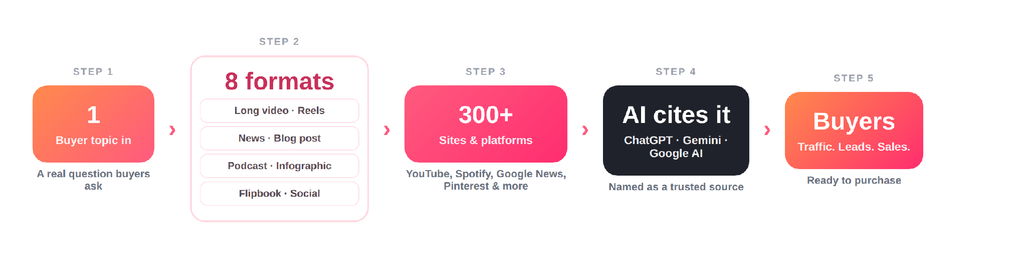
How MultiCasting works: one topic becomes eight formats, published across 300+ platforms, cited by AI, driving buyer traffic back to your site.
Three reasons this matters for a business chasing organic growth:
- Own the research journey. 93% of buyers research online before they purchase (Source: Textedly, 2025). Show up with a helpful answer at that moment and you win trust before the click.
- Escape the ad treadmill. Content you publish today keeps pulling traffic in month 12 and beyond. Ads stop the day you stop paying.
- Get cited by AI. When ChatGPT, Gemini and Google AI keep seeing consistent, trustworthy content about your brand across many sources, they start naming you as the recommendation.
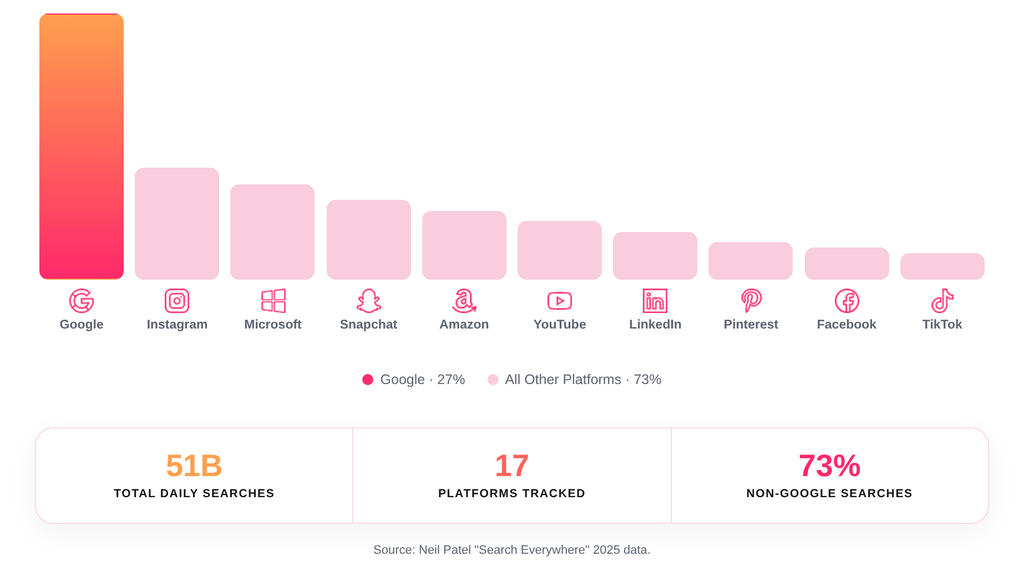
Buyers search in far more places than Google. Source: Neil Patel, Search Everywhere, 2025 data.
How It Works: Three Steps, About 20 Minutes A Campaign
AmpiFire removes the mystery. The workflow is mechanical, not magical, and it runs in three steps.
Step 1: Research and target. Give it a topic, or seed it with any URL, and it surfaces the exact questions your buyers type into Google, ChatGPT and YouTube before buying. One keyword can open up thousands of topics people actually search.
Step 2: Create and repurpose. Any topic, product page, article, video or competitor URL becomes a full campaign. One topic, eight formats, each written for the platform it publishes on. A YouTube video is scripted for YouTube. A podcast flows for listeners. An infographic is built for image search.
Step 3: Distribute and amplify. The content publishes to your own website and social channels, then out across 300+ sites including Google News, YouTube, Spotify, Apple Podcasts, Business Insider, Pinterest and LinkedIn. Then you do it again, and each campaign stacks on the last.
The speed claim is the part most marketers underestimate. A full multi-format campaign, created and published, runs in about 20 minutes. Doing the same set by hand is closer to a week of expert work. The comparison below lays it out.
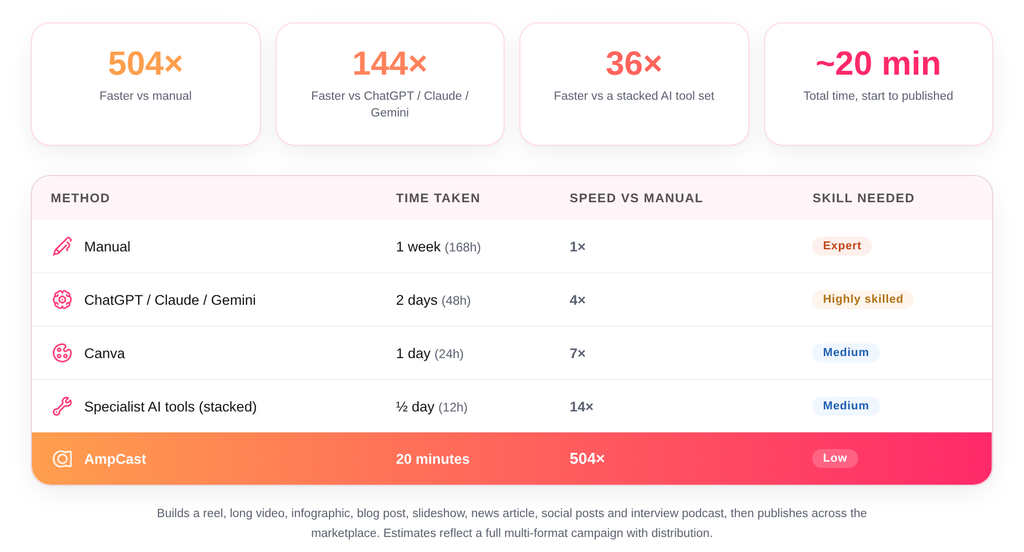
A full multi-format campaign in about 20 minutes, versus a week of expert work by hand.
The Proof: Results Real Businesses Have Reported
Speed and reach mean nothing without results, so here is the evidence, with sources named.
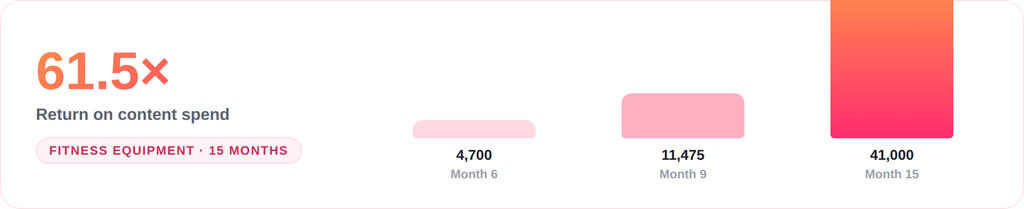
Fitness equipment brand: 61.5x return on content spend
An Ohio brand competing against Peloton and NordicTrack, who each spend $100M+ a year on advertising, could not win a bidding war. Instead they answered buyer questions with content. Recent figures: $5,000 a month in content turned into $307,500 a month in sales, with 41,000 monthly blog visits from Google alone.
Their CMO, who stepped in to protect the campaign, said walking away from a strategy the data showed was working would have been “business malpractice.”
— reported in AmpiFire fitness e-commerce case study, 2026
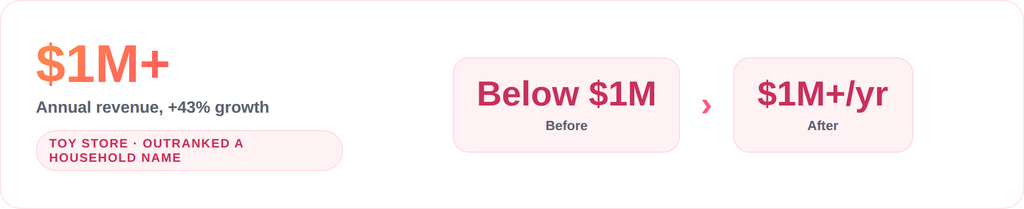
Toy store outranks LEGO and crosses $1M a year
A part-time dropshipper grew a toy store past seven figures in annual revenue, with 43% growth, by outranking a household name on the questions buyers actually search.
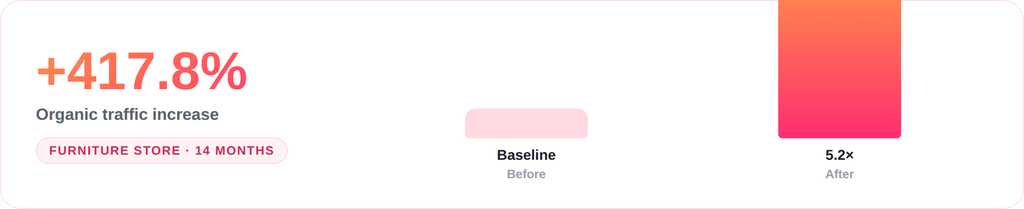
Furniture store: 417.8% increase in organic traffic
A mattress e-commerce store grew organic traffic by more than four times using a focused content plan.
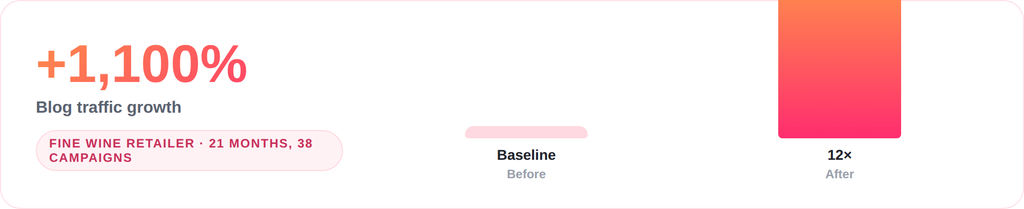
Wine retailer: 1,100% blog growth in 21 months
A fine wine brand published 38 campaigns over 21 months and attributed 70,000+ new sales to the content, with 21,540 new visitors from the blog alone.
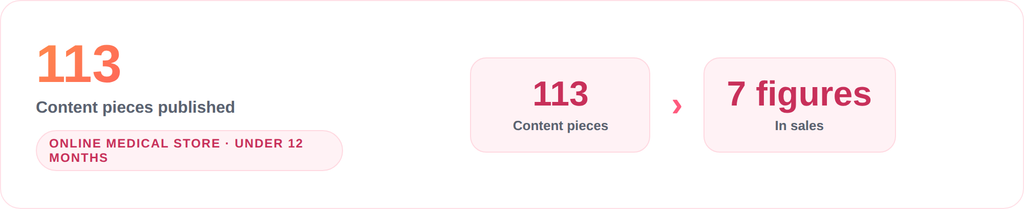
Medical store: millions in sales from 113 pieces of content
An online medical store generated seven figures in sales from just 113 content pieces in under 12 months.
Dental clinic doubles its organic traffic
Six campaigns were enough to double a dental clinic’s organic traffic.
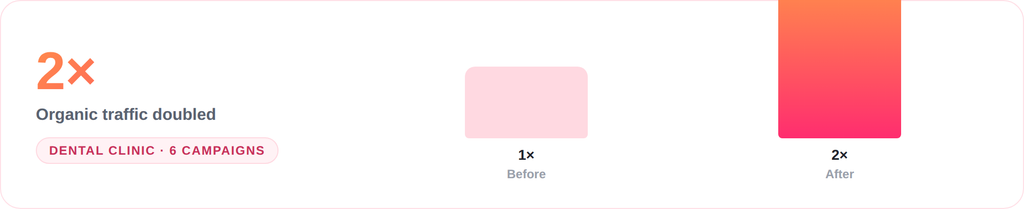
Two things stand out across these stories. First, the winners are underdogs who could not outspend the giants and chose to out-answer them instead. Second, the growth compounds. In the fitness case, more than 73% of blog traffic by month 15 came from content published six months or more earlier.
What Real Users Say
Beyond the case studies, the reviews point the same way. On Trustpilot, AmpiFire holds a 4-star rating across 32 reviews, with support singled out repeatedly. One agency owner on SourceForge described being able to white label the service for clients, and called the exposure hard to match elsewhere. Another long-term user credited a steady, positive trajectory in their online presence over six months.
The recurring theme in the critical feedback is worth naming too, because it protects you from a false expectation: organic growth takes time. It is a foundation you lay campaign by campaign, and the brands that commit to it are the ones posting the biggest numbers.
Where AmpiFire Fits, And Where It Does Not
You will get the most from AmpiFire if you sell something buyers research before they buy, and you want traffic that keeps paying long after the work is done.
A strong fit if you are:
- E-commerce or DTC. Tired of shrinking margins on paid ads and ready to build organic traffic that compounds.
- A local business. You need to be found by customers ready to buy, and want to claim local search with targeted content.
- An agency or marketer. You want to deliver big client results fast and build high-margin recurring revenue.
Probably not for you if:
- You need results this month. Content authority builds over 12 to 18 months, and money cannot buy the shortcut.
- You only want to make paid ads. AmpiFire is a full organic content and distribution engine. It makes ads convert better, and it is not an ad creation tool.
The Bottom Line
Paid ads rent you attention. The rent goes up every year, and it stops the day you stop paying. AmpiFire builds an asset instead: content that answers real buyer questions, published everywhere those buyers research, cited by the AI engines they now ask first.
For a business that wants stable organic traffic, higher margins and a brand the algorithms trust, that is the difference between chasing traffic and owning it. AmpiFire backs its offer with a straightforward guarantee: get more reach and organic traffic, or you do not pay.
So here is the question worth sitting with. Your competitors are being researched right now, on channels you may not even be publishing to. When a buyer asks the internet what to buy, is your brand the answer, or is it invisible? Every week you wait is traffic, trust and profit going to whoever showed up instead.
This review reflects publicly reported case studies and third-party reviews. Results vary, and organic content growth takes time and consistency.